

New Concepts in Nuclear Physics
N. L. Bowen, The Author of This Work
The author, N. L. Bowen, has a Bachelor of Science Degree in Physics from the University of Missouri, graduating in 1977, Phi Beta Kappa and Magna Cum Laude. She has a Master of Electrical Engineering Degree from Massachusetts Institute of Technology, graduating in 1979. She has worked in industry for over 20 years as an Electrical Engineer in the field of Integrated Circuit Design and Applications. During her career, she has published numerous peer-reviewed articles related to new concepts for electrical engineering and integrated circuitry.
With her education in both physics and electrical engineering, she is very familiar with the physics of electromagnetics. Due to her strong engineering background and training, she is exceedingly interested in innovation and ingenuity, but with a strong predilection for reality-based concepts and common sense. Throughout her career as an engineer, she applied her strong abilities for innovation and ingenuity to the field of integrated circuit design, while maintaining the reality-based concepts required for any engineering project. In this paper, she applies those same skills of innovation, ingenuity, and reality-based concepts to the field of nuclear physics.
Cold Fusion & LENR: From Metal Lattices to Mini Reactors with Lynn Bowen
Recently Published Papers

Discrepancies with the Recent Models of Nucleons, PowerPoint
October 2026
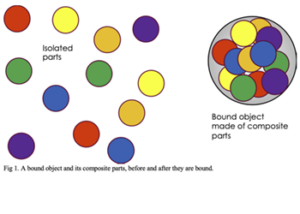
Experimental Measurements of Quark Mass — Experiments found the mass of the three quarks make up only about 1% of the proton mass. Similarly for a neutron. Unexpected findings: new models of nucleons have been proposed and attempt to explain this missing 99% of the mass.
Discrepancies with the Recent Models of Nucleons
October 2026
Recent theoretical calculations about the mass of the partons within protons have raised questions, specifically regarding what comprises the bulk of the mass of the nucleons. As a result of these recent theoretical calculations and the questions they precipitate, there are many new models of the nucleons that claim to have solved the question of the missing nucleon mass. This paper is an examination these recent nucleon models, exploring the accuracy of the science, the mathematics, and the concepts described therein.
The Potential Miscalculation of COE for Pressurized Gas LENR Systems
October 2026
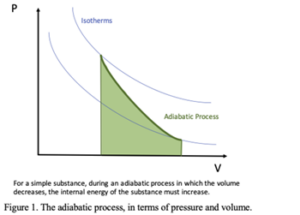
A potential miscalculation of the coefficient of energy, or COE, for high-pressure gas-type Low Energy Nuclear Reactors (LENR) is discussed. The mechanism for this potential miscalculation is explained, and a numeric example is given to estimate the magnitude of the effect. The importance of thermodynamics to LENR systems is emphasized.
A Simple Calculation of the Inter-Nucleon Up-to-Down Quark Bond and Its Implications for Nuclear Binding
October 2026
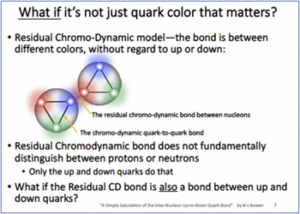
A simple calculation of the inter-nucleon up-to-down quark bond and its implications for nuclear binding.
A Simple Calculation of the Internucleon Up-to-Down Quark Bond and Its Implications for Nuclear Binding
October 2026
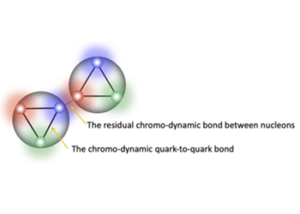
This paper describes an interesting and potentially significant phenomenon regarding the properties of up and down quarks within the nucleus, specifically how the possible internucleon bonding of these quarks may affect the bonding energy of the nuclear force. A very simple calculation is used, which involves a bond between two internucleon up and down quarks.
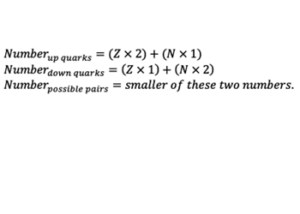
A One Parameter Semi-Empirical Binding Energy Formula, Based on Quark Flavor and Quantum Considerations
October 2026
A one-parameter semi-empirical formula has been ascertained that can produce results similar to the five-parameter Weizsäcker formula, in terms of being able to predict nuclear binding energies to within a few percent. This one-parameter semi-empirical formula is similar to the residual chromodynamic model, in that the force binding the nucleons together in a nucleus is an internucleon quark-to-quark bond. However, this one-parameter semi-empirical formula is based upon the quark flavor rather than the quark color.
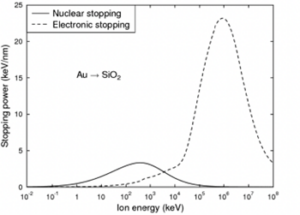
A Lattice-Assisted Conventional Explanation for LENR, Part III
October 2026
This paper is part III of a three-part series of companion papers. In part I of these companion papers, an explanation of the LENR (Low Energy Nuclear Reactions) mechanism is given, using lattice assistance and conventional explanations. All of the so-called “miracles” of LENR are explained using detailed explanations, calculations, and equations. This three-part series of papers show that an LENR reactor is able to create a continuous self-maintained reaction. It is recommended that the reader first examines the Part I and Part II papers to gain a better understanding of the mechanisms involved in this explanation.
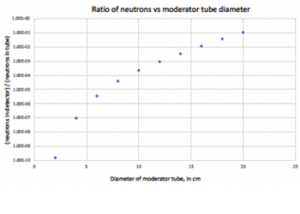
A Lattice-Assisted Conventional Explanation for LENR, Part II
October 2026
This paper is part II of a three-part series of papers. In part I of these companion papers, an explanation of the LENR (Low Energy Nuclear Reactions) mechanism is given, using lattice assistance and conventional explanations. All of the so-called “miracles” of LENR are explained using detailed explanations, calculations, and equations. This three-part series of papers show that an LENR reactor is able to create a continuous self-maintained reaction. It is recommended that the reader first examines the Part I paper to gain a better understanding of the mechanisms involved in this explanation.
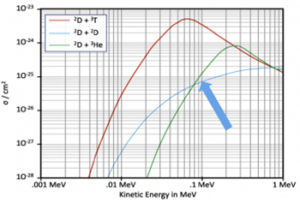
A Lattice-Assisted Conventional Explanation for LENR, Part I
October 2026
This paper presents a lattice-assisted conventional explanation for Low Energy Nuclear Reactions and Low Energy Nuclear Reactors. (LENR). Using such explanations, calculations, and equations, along with the beneficial behavior and lattice assistance of the palladium-deuteride host material, the so-called “miracles” of LENR are explained.
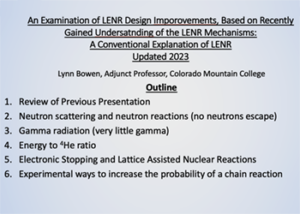

A Conventional Explanation for a Pd-2D Low Energy Nuclear Reactor
May 2022
The original presentation, A Conventional Explanation for a Pd-2D Low Energy Nuclear Reactor, was presented in Assisi, Italy at the International Workshop on Anomalies in Hydrogen Loaded Metals (IWAHLM-15). This current presentation here has been revised, updated, and improved.
more…

A Simple Calculation of the Inter-Nucleon Up-to-Down Quark Bond and its Implications for Nuclear Binding
July 2018
This paper describes an interesting and potentially significant phenomenon regarding the properties of up and down quarks within the nucleus, and how the possible inter-nucleon bonding of these quarks may affect the bonding energy of the nuclear force. A very simple calculation is used, which involves a bond between two inter-nucleon up and down quarks. This simple calculation does not depend on the type or mechanism for the bond; furthermore, this simple calculation does not specify the shape or structure for the nucleus. This calculation only examines the energy of all possible up-to-down inter- nucleon bonds that may be formed within a quantum nucleus. A comparison of this total energy is made to the experimental binding energy with excellent results. The potential significance of this finding is briefly discussed.
more…

The Electromagnetic Considerations of the Nuclear Force (Part I)
August 2018
This paper explores how the electromagnetic energies of the quarks within the nucleus affect the behavior of the nuclear force. By examining the electromagnetic energies and forces, many questions about nuclear behavior can be answered and many insights into the nucleus can be gained.
more…

The Electromagnetic Considerations of the Nuclear Force (Part II)
July 2020
This paper explores how the electromagnetic energies of the quarks within the nucleus affect the behavior of the Nuclear Force. By examining the electromagnetic energies and forces, many questions about nuclear behavior can be answered and many insights into the nucleus can be gained.
more…

An Examination of the Updated Empirical Data in Support of the Shell Model
August 2020
This paper is a re-examination of the experimental data, as is currently known in 2020, in support of the shell model and its concepts. The shell model of the nuclear force was proposed in 1955, and it has since been accepted as the fundamental model of the nuclear force. The shell model was based on the experimentally-known data at that time, supporting the concept of nuclear shells.
more…

A Simple Calculation of the Inter-Nucleon Up-to-Down Quark Bond and its Implications for Nuclear Binding
December 2020
This paper describes an interesting and potentially significant phenomenon regarding the properties of up and down quarks within the nucleus, specifically how the possible internucleon bonding of these quarks may affect the bonding energy of the nuclear force. A very simple calculation is used, which involves a bond between two internucleon up and down quarks.
more…

The Electromagnetic Considerations of the Nuclear Force (Part II): The Determination of the Lowest Energy Configurations for Nuclei
December 2021
This paper explores how the electromagnetic energies of the quarks within the atomic nucleus affect the behavior of the Nuclear Force. By examining the electromagnetic energies and forces, many questions about nuclear behavior can be answered, and many insights into the atomic nucleus can be gained.
more…

Discrepancies with the Recent Models of Nucleons
September 2022
Recent theoretical calculations about the mass of the partons within protons have raised questions, specifically regarding what comprises the bulk of the mass of the nucleons. As a result of these recent theoretical calculations and the questions they precipitate, there are many new models of the nucleons that claim to have solved the question of the missing nucleon mass. This paper is an examination these recent nucleon models, exploring the accuracy of the science, the mathematics, and the concepts described therein.
more…

The Electromagnetic Considerations of the Nuclear Force (Part III): An Analysis of the Electromagnetic Contributions to Nuclear Behavior
September 2022
This theory discusses the role of the electromagnetic force inside the atomic nucleus. Previous nuclear theories have relegated the electromagnetic force as being a relatively minor component, considering only the Coulomb force of the protons. These previous models usually make the incorrect and outdated assumptions of a homogeneously-charged proton and a homogeneously-neutral neutron.
more…